How to A/B Test Email Subject Lines: A Practical Guide
Learn how to A/B test email subject lines, choose meaningful variants, measure opens and clicks, and apply a repeatable process in your email software.
In this guide
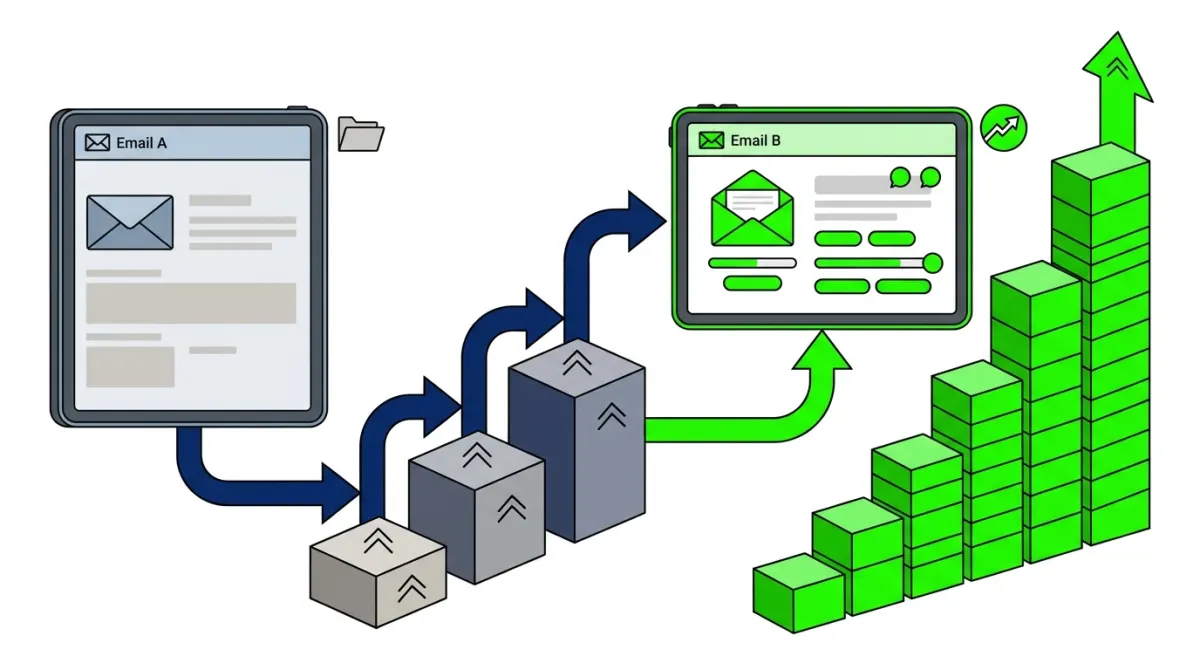
To a/b test email subject lines, split a small portion of your list into two or more segments, send each segment a different subject line for the same email, and track which version gets more opens or clicks. Once a clear winner emerges, send that subject line to the rest of your audience and apply what you learned to future campaigns. The process takes minutes to set up but requires a bit of discipline around sample size, timing, and the metric you use to declare a winner.
If you send your own email campaigns, whether for a SaaS product, an info product launch, or a business newsletter, you already know that the subject line decides whether your email gets opened at all. To a/b test email subject lines is the most direct way to stop guessing and start knowing what actually makes your audience click. This guide walks through the full process: what the test actually is, how to set one up correctly, which subject line elements are worth testing, and how to read the results so you apply the right lesson to your next send.
What Is an A/B Test for Email Subject Lines?
An A/B test for email subject lines is a controlled experiment where you create two (or occasionally more) versions of the same email, each with a different subject line, and send them to separate, randomly chosen slices of your list. Everything else in the email stays identical: same body content, same links, same sender name. The only variable is the subject line, which lets you isolate its effect on your results.
Marketers sometimes call this split testing, but the mechanics are the same regardless of the label. Here is the basic flow:
- You pick a small, representative sample of your subscriber list.
- You split that sample randomly into two groups.
- Each group receives the same email but with a different subject line.
- You measure a specific metric, usually open rate, over a defined window.
- The subject line that performs best is sent to the remaining subscribers who were not part of the initial test.
The goal is not to find one "perfect" subject line forever. It is to build an evidence-based habit: every send becomes a small experiment that teaches you something about your specific audience, which you can reuse in future campaigns and automated sequences.
How to Set Up an Email Subject Line A/B Test
Setting up a subject line test is straightforward in most email marketing software, but a few decisions upfront determine whether your results will actually mean something.
Step 1: Write a focused hypothesis
Before touching your email tool, decide what you are trying to learn. "Does mentioning a number increase opens?" is a hypothesis. "Let's try two random subject lines and see" is not. A focused hypothesis keeps you from testing five things at once and getting results you cannot interpret.
Step 2: Keep everything except the subject line identical
Use the same body copy, same send time, same sender name, and same list segment for both variants. If you change the subject line and the preview text and the time of day all at once, you will not know which change caused the difference in results.
Step 3: Decide your sample size and test window
Most email marketing software asks you to choose what percentage of your list receives the test versions before the winner goes to everyone else. A small sample reduces risk if one variant performs badly, but too small a sample makes the result unreliable. A practical approach is to test on a meaningful fraction of your active subscribers (not just the first few hundred who open emails anyway) and give the test enough time to collect opens across different time zones and inboxes before declaring a winner.
Step 4: Choose your winning metric upfront
Decide before you launch whether success means open rate, click rate, or a downstream outcome like conversions. Changing your success metric after seeing the results defeats the purpose of the test. If you are testing a subject line specifically, open rate is almost always the right metric, since the subject line's job is to get the email opened, not to drive the click.
Step 5: Launch, wait, and let the winner send automatically where possible
Many platforms can automatically send the winning subject line to the rest of your list once the test window closes, which saves you from having to monitor results manually. Before you commit a batch of ideas to a live test, running them through an email subject line tester can help you catch obvious issues, like length problems or spam-trigger words, so the test itself focuses on genuine strategic differences rather than avoidable mistakes.
What to Test in Your Subject Lines
Not every subject line change is worth a dedicated test. Some variables consistently move the needle more than others. Here is a practical breakdown of what to prioritize.
| Variable | Example A | Example B | What you learn |
|---|---|---|---|
| Length | Your invoice is ready | Your invoice is ready to download and review today | Whether short, scannable lines outperform descriptive ones for your audience |
| Personalization | Check out our latest feature | [First name], check out our latest feature | Whether a recipient's name improves open rate for your list |
| Word order | Save 10% before the week ends | Before the week ends: save 10% | Whether leading with the hook or the context performs better |
| Question vs. statement | Still deciding on a plan? | Here's how to pick the right plan | Whether curiosity or clarity drives more opens |
| Urgency or time framing | New workflow templates are live | New workflow templates: available this week only | Whether time pressure changes open behavior for your audience |
A few additional elements are worth testing once you have covered the basics above:
- Emoji presence. Some audiences respond well to a single relevant emoji; others see it as noise. Test with and without, never with multiple emoji variants at once.
- Numbers and specificity. "5 ways to reduce churn" versus "Ways to reduce churn" tests whether concrete numbers add credibility for your subscribers.
- Tone. A direct, product-focused line versus a more conversational one can reveal whether your list responds better to formal or informal language.
- Sender context in the line. For transactional or product-update emails, testing whether naming the product or feature explicitly improves recognition and opens.
Only test one variable per experiment. If you want to explore more subject line angles and real-world patterns before you commit to a test plan, the email subject lines resource hub walks through additional examples and strategies by use case.
How to Measure and Apply the Winning Result
Running the test is only half the job. Reading the results correctly, and then actually using what you learned, is what turns A/B testing into a long-term advantage rather than a one-off curiosity.
Pick the right metric for the question you asked
If your hypothesis was about the subject line itself, judge the test on open rate. If you were testing something that also touches the body copy or offer, click rate or conversion rate might be more appropriate. Mixing metrics across tests makes it hard to compare results over time.
| Metric | Best for testing | Watch out for |
|---|---|---|
| Open rate | Subject line wording, length, personalization, urgency | Inbox provider privacy features that can inflate or distort open tracking |
| Click rate | Call to action, body content, offer framing | Clicks depend on content as much as the subject line, so isolate variables carefully |
| Conversion rate | Overall campaign effectiveness, revenue-driving sends | Needs a larger sample and longer window to reach a reliable signal |
Make sure the difference is real, not noise
Small lists and short test windows can produce a "winner" that is really just random variation. Before declaring victory, check that the gap between variants is large enough and consistent enough to trust, and that your sample size was big enough to support the conclusion. If the difference is marginal, treat the result as inconclusive rather than forcing a decision.
Turn the winner into a repeatable pattern
A single winning subject line is useful for one campaign. The real value comes from noticing patterns across multiple tests: does your audience consistently prefer short lines, specific numbers, or a conversational tone? Keep a simple log of each test, the hypothesis, the winner, and the margin, so you build a reference you can apply to new campaigns without re-testing from scratch every time.
Once you have a reliable winning pattern, apply it beyond one-off campaigns. If you run onboarding sequences, re-engagement flows, or other recurring sends through email automation, you can carry proven subject line patterns into those workflows so every automated email benefits from what you learned in your manual tests, rather than treating automation and testing as separate efforts.
Finally, remember that audience preferences shift over time. A subject line pattern that won six months ago may not hold today, especially if your list has grown or your product has changed. Treat A/B testing as an ongoing habit built into your sending process, not a one-time project, and you will keep a clear, evidence-based answer to what actually gets your emails opened.
Frequently asked questions
Is a longer or shorter subject line more effective in an A/B test?
Neither length is universally better. A shorter subject line may communicate the main idea quickly, while a longer one can add useful context or specificity. Test length alongside the message, audience, and email format rather than assuming one style will always win. Keep the core promise similar between variants so the comparison measures length or clarity, not two completely different offers.
Should you test personalization in an email subject line?
Yes, personalization can be a useful subject line variable when your subscriber data is accurate and relevant. Compare a personalized version with a non-personalized version while keeping the rest of the message as similar as possible. Consider whether the personal detail adds genuine relevance, because an incorrect, outdated, or awkwardly inserted detail can reduce trust. Review performance beyond opens when possible, including clicks and downstream actions.
Can you A/B test more than two email subject lines?
Some email platforms support testing more than two subject line variants, but adding variants divides the available audience across more comparisons. Use multiple variants only when you have enough recipients for each version to produce useful evidence. Otherwise, start with two clearly different options and repeat the test in a later, comparable workflow. Keep the test focused so the result remains easy to interpret.
What should you do if the email subject line test results are inconclusive?
Treat an inconclusive result as useful information, not as proof that both subject lines perform identically. Check whether the variants differed enough, whether the audience was large and balanced enough, and whether another factor affected delivery or engagement. Record the result, avoid declaring a winner, and design a follow-up test around one clearer difference, such as specificity, wording, personalization, or message framing.
When should you test subject lines in campaign and newsletter workflows?
Test before sending a repeatable campaign or newsletter format, especially when the same audience and objective recur. A test can also inform a one-time campaign when the platform can evaluate variants before the main send. Avoid comparing unrelated sends with different audiences, content, or timing, because those differences make the subject line result harder to interpret. Document the workflow so future tests build on the same learning.
How can you decide when an email subject line result is strong enough to use?
Use a result when the winning variant shows a meaningful difference under a fair comparison and the outcome matches your campaign objective. Do not rely on a small change in opens alone if clicks, conversions, or other engagement signals point elsewhere. Check that the test groups were comparable, the variants followed the same rules, and the result is not driven by an obvious delivery or tracking issue. Apply the learning cautiously to similar sends.