How to Grow an Email List: 10 Practical Strategies
Learn how to grow an email list with practical opt-in tactics, lead magnets, forms, segmentation, automation, and email marketing software that convert.
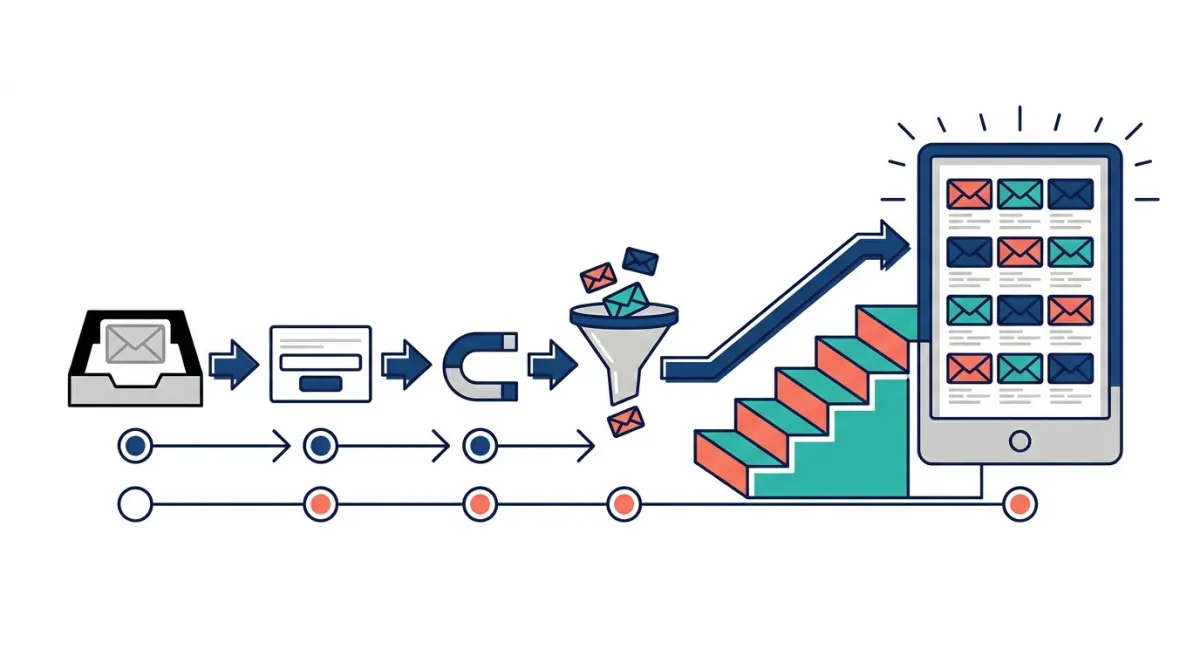
In this guide
Growing an email list reliably means combining a solid technical foundation (consent, authentication, a dependable sending tool) with a genuinely useful offer, well-placed signup forms, multi-channel promotion, and ongoing segmentation. This guide breaks the process into five concrete stages so you can learn how to grow an email list without wasting effort on bought contacts or unengaged addresses. Follow the steps in order and you will end up with fewer, better subscribers rather than a large but unresponsive list.
1. Set Up the Foundations for Healthy List Growth
Before you add a single signup form to your site, it pays to get the groundwork right. Learning how to grow an email list that actually performs starts with the infrastructure behind it, not the tactics on top of it. A list built on weak foundations grows numbers but not revenue, and the subscribers you worked hard to attract never see your messages because they land in spam.
Choose the Right Email Marketing Software
Your email marketing software is the backbone of every tactic described later in this article. Before comparing providers, list what you actually need: signup forms, automated welcome sequences, subscriber tagging, transactional sending for account and billing emails, and a way to measure engagement over time. SaaS founders and developers often outgrow simple newsletter tools quickly because they also need transactional email (password resets, invoices, notifications) alongside marketing campaigns. If that describes your situation, look at a dedicated email platform for SaaS that can handle both campaign and transactional sending from the same account, so your subscriber data and your product emails stay connected instead of living in two disconnected systems.
If you are still comparing options, a running list of email marketing tools and how they fit different use cases can help you shortlist candidates before you commit to one platform.
Protect Deliverability From Day One
A fast-growing list is worthless if your emails never reach the inbox. Set up domain authentication (SPF, DKIM, and DMARC) with your email service provider before you launch any signup campaign. Use double opt-in so every new subscriber confirms their email address, which keeps fake and mistyped addresses out of your list from the start. Finally, make unsubscribing effortless: a one-click unsubscribe link reduces spam complaints and keeps your sender reputation intact, which protects the deliverability of every email you send to the rest of your list.
2. Give People a Compelling Reason to Subscribe
Nobody hands over their email address out of goodwill. They do it because they expect something specific in return. This is the step most guides on how to grow an email list rush through, yet it determines whether your signup forms convert at all.
Create a Lead Magnet People Actually Want
A lead magnet works when it solves one narrow, specific problem for one specific audience. A generic "subscribe to our newsletter" button rarely converts well because it asks for a commitment without offering a clear reason. Instead, build something immediately useful: a checklist, a short template, a calculator, or a focused mini-guide tied directly to what your visitor came to your site for in the first place.
Interactive content performs particularly well here. A quiz, an assessment, or a calculator that gives a personalized result in exchange for an email address tends to convert better than a static PDF, because the visitor feels they are getting something tailored rather than generic.
Match the Offer to Where You Are in the Funnel
Not every visitor is ready for the same offer. Someone reading a comparison article is closer to a decision than someone reading an introductory guide, so the lead magnet should reflect that difference.
| Funnel stage | Visitor intent | Lead magnet example |
|---|---|---|
| Awareness | Learning about a problem | Checklist or short guide |
| Consideration | Comparing solutions | Template, calculator, or worksheet |
| Decision | Ready to try a tool | Product demo, case study, or sample workflow |
Pairing the right offer with the right stage keeps conversion rates healthy and avoids attracting subscribers who were never a good fit for your product in the first place.
3. Capture More Subscribers With High-Converting Forms
Once you have an offer worth signing up for, the next step in any plan to grow an email list is making sure visitors can actually find and complete the signup form without friction.
Place Forms Where Intent Is Highest
Embed signup forms directly in your most-read blog posts, not just in a sidebar or footer that visitors rarely scroll to. Add a form at the end of high-performing articles, inside a dedicated landing page you can link from ads and social posts, and at natural pause points such as after a tutorial's conclusion. On a SaaS site, the signup page itself, a feature page, or a pricing page are also strong candidates, since visitors there have already shown buying intent.
Design Forms for Conversion
Keep the form short: name is often unnecessary, and email address alone is usually enough to start the relationship. Use a clear, specific headline that restates the value of the lead magnet rather than a vague "join our list." Smart, well-timed popups (triggered by scroll depth or exit intent rather than appearing instantly) tend to convert better than popups that interrupt the first few seconds on a page. Test placement and copy before testing colors or buttons, since placement and offer clarity usually move conversion rates far more than visual tweaks.
- Use one clear call to action per form, not several competing options.
- Confirm the value proposition in the button text itself (for example, "Get the checklist" instead of "Submit").
- Make the privacy expectation explicit: tell people what you will send and how often.
- Test on mobile first, since most form submissions now happen on a phone.
4. Promote Your Signup Across Multiple Channels
A great form on a page nobody visits will not grow your list. The next part of learning how to grow an email list is distribution: making sure the right people actually encounter your signup offer.
Leverage Content and Organic Channels
Publish content that naturally leads into your lead magnet. A detailed how-to article, a comparison guide, or a tutorial that solves a real problem earns organic search traffic over time, and each of those visitors is a candidate for your list if the follow-up offer is relevant to what they just read. Encourage existing subscribers to share or forward valuable emails to colleagues; a simple "forward this to a teammate who needs it" line in a newsletter can bring in warm referrals at no extra cost.
Use Partnerships and Co-Marketing
Guest posts, podcast appearances, and co-hosted webinars put your signup offer in front of an audience that already trusts the host. Cross-promotion with a complementary (non-competing) tool or community can work the same way: both sides offer value to an audience that is already a good fit. Social media profiles and communities (LinkedIn, niche forums, Slack or Discord groups relevant to your audience) are also worth a pinned link to your landing page, since they capture people actively looking for solutions in your space.
| Channel | Best for | Effort level |
|---|---|---|
| Blog content + SEO | Long-term, compounding growth | Medium to high, pays off over time |
| Social media and communities | Fast visibility with an existing audience | Low to medium |
| Guest content and partnerships | Borrowed trust and qualified traffic | Medium |
| Referral and forwarding | Warm, low-cost growth from existing subscribers | Low |
5. Engage, Segment, and Measure Your Email List
Growing a list is only half the job. The subscribers you add need to stay engaged, or your growth efforts quietly undo themselves through unsubscribes and spam complaints. This is where most of the compounding value of knowing how to grow an email list actually shows up.
Build a Welcome Sequence That Converts
The first few emails after signup set the tone for the entire relationship. A short welcome sequence that delivers the promised lead magnet, introduces what subscribers can expect, and offers one clear next step tends to outperform a single generic welcome email. Automating this sequence means every new subscriber gets a consistent experience without manual work on your end. If you want to see how automated welcome flows and behavioral follow-ups are typically structured, this collection on email automation walks through common sequence patterns you can adapt to your own list.
Segment and Tag Subscribers for Relevance
Not every subscriber wants the same emails. Segmentation, dividing your list into groups based on how someone signed up, what they clicked, or what plan they are on, lets you send more relevant messages to each group instead of one blanket email to everyone. Tags are a lightweight way to do this: tag a subscriber by lead magnet source, product interest, or lifecycle stage, then use those tags to trigger targeted follow-ups. For teams building their own signup and tagging logic programmatically, a TypeScript SDK or REST API makes it possible to tag subscribers automatically based on in-app behavior rather than relying on manual list management.
Track the Metrics That Matter
A list is only as valuable as the engagement it generates. Vanity metrics like total subscriber count tell you little on their own; the metrics below give a clearer picture of list health.
| Metric | What it tells you | Why it matters |
|---|---|---|
| Signup conversion rate | Percentage of visitors who complete a form | Shows whether your offer and form design are working |
| Open rate | Share of subscribers who open your emails | Early signal of subject line and sender reputation health |
| Click-through rate | Share of subscribers who engage with content | Reflects relevance of your messaging to each segment |
| Unsubscribe and bounce rate | Subscribers leaving or undeliverable addresses | Flags list quality issues before they hurt deliverability |
| Net list growth rate | New subscribers minus unsubscribes and bounces | The real measure of whether your list is healthily growing |
Review these numbers on a regular schedule, and remove or re-engage subscribers who have gone cold for an extended period. A smaller, engaged list consistently outperforms a larger one full of addresses that never open your emails, both in results and in how reliably your messages reach the inbox in the first place.
Frequently asked questions
What Is the Best Way to Grow an Email List?
The best approach combines a clear audience benefit, a relevant signup offer, prominent opt-in forms, and consistent promotion across channels. Make the value of subscribing specific, such as useful education, resources, updates, or personalized content. Then test different headlines, form locations, calls to action, and lead magnets. Monitor both subscriber volume and subscriber quality so growth supports engagement, conversions, and long-term deliverability.
How Can I Grow an Email List Without Buying Contacts?
Build your list through permission-based methods, including website forms, landing pages, content upgrades, webinars, events, referrals, and social media promotions. Give people a clear reason to subscribe and explain what they will receive. Avoid purchased or scraped contacts because they may be unengaged, violate consent requirements, increase spam complaints, and damage sender reputation. Every subscriber should knowingly choose to receive your emails.
Should I Use Double Opt-In for Email Signups?
Double opt-in can improve list quality by requiring subscribers to confirm their email address before receiving ongoing messages. This helps reduce fake addresses, typos, bot signups, and accidental subscriptions. It may also produce a smaller confirmed list than single opt-in, so choose the process that fits your audience, compliance needs, and risk tolerance. Whichever method you use, make consent and expectations clear.
How Often Should I Clean or Review My Email List?
Review list health regularly rather than waiting for a major deliverability problem. Look for repeated bounces, spam complaints, unsubscribes, invalid addresses, and subscribers who have not engaged over an appropriate period for your sending pattern. Remove or suppress addresses that should not receive messages, and consider a re-engagement process for inactive contacts. Document your criteria so list maintenance stays consistent and defensible.
What Should I Do After Someone Joins My Email List?
Set expectations immediately by confirming what the subscriber signed up for, how often you plan to email, and what kind of content they will receive. A welcome sequence can deliver the promised resource, introduce your brand, guide the subscriber to useful content, and invite a preference choice. Keep the first messages focused and relevant, then use engagement signals to improve future content and targeting.
How Can I Tell Whether My Email List Growth Strategy Is Working?
Track more than the number of new subscribers. Compare signup conversion rate, source of each subscriber, confirmation rate, bounce rate, unsubscribe rate, spam complaints, engagement, and downstream actions that matter to your goals. Evaluate these metrics by form, landing page, lead magnet, and promotion channel. A slower-growing source with stronger engagement may be more valuable than a high-volume source with poor list quality.