Lumail vs Campaign Monitor: Which Email Platform Fits How You Work?
Campaign Monitor is a polished marketer and agency dashboard priced by contacts. Lumail bills by emails sent and lets AI agents operate the whole account.
In this guide
Campaign Monitor is a design-led email marketing platform for marketers and agencies, priced by how many contacts you store; Lumail is an email platform priced by emails sent, built so AI agents and developers can operate it. Both send campaigns, run visual automations, and handle transactional email. The difference is who operates the account and what the bill follows.
Campaign Monitor, now part of Marigold, has served small businesses, nonprofits, and agencies for more than two decades, with a polished builder, prebuilt journeys, and agency white-label tools. Lumail is built for teams whose email work runs through assistants, terminals, and product code as much as through a visual editor. Campaign Monitor facts here come from its official pricing page as of August 2026; plans change, so check before you buy. For the compact version, see the side-by-side comparison table.
Lumail vs Campaign Monitor at a glance
| Decision | Lumail | Campaign Monitor |
|---|---|---|
| Core focus | Campaigns, workflows, transactional email, and AI agents | Design-led email marketing for marketers and agencies |
| Pricing basis | Emails sent; unlimited subscribers on every plan | Plan plus contact tier; Lite also caps monthly sends |
| Free plan | 3,000 emails per month, no credit card | None; 30-day trial with 500 contacts and 500 emails |
| Paid entry | Premium at $20/month with 40,000 emails | Lite at $13/month for up to 500 contacts |
| AI and developer access | 89 MCP tools, CLI, TypeScript SDK, REST API | In-app AI writing tools and a REST API; no MCP server |
| Automation | Graph workflows on every plan | Visual journeys and drip series on paid monthly plans |
| Transactional email | Built in through the API or SMTP | Included on monthly plans through API or SMTP |
| Best fit | Teams running email through agents, code, and a visual app | Marketing teams and agencies managing client accounts |
Lumail's current plans are on the Lumail pricing page.
Choose Lumail if AI agents should operate your email
Campaign Monitor's AI lives inside the app: an AI Writer, an Email Booster, a Segment Mapper, and a Marketing Monitor that help a person in the builder. Developers get a REST API with wrappers in several languages, but there is no official MCP server, ChatGPT app, CLI, or TypeScript SDK.
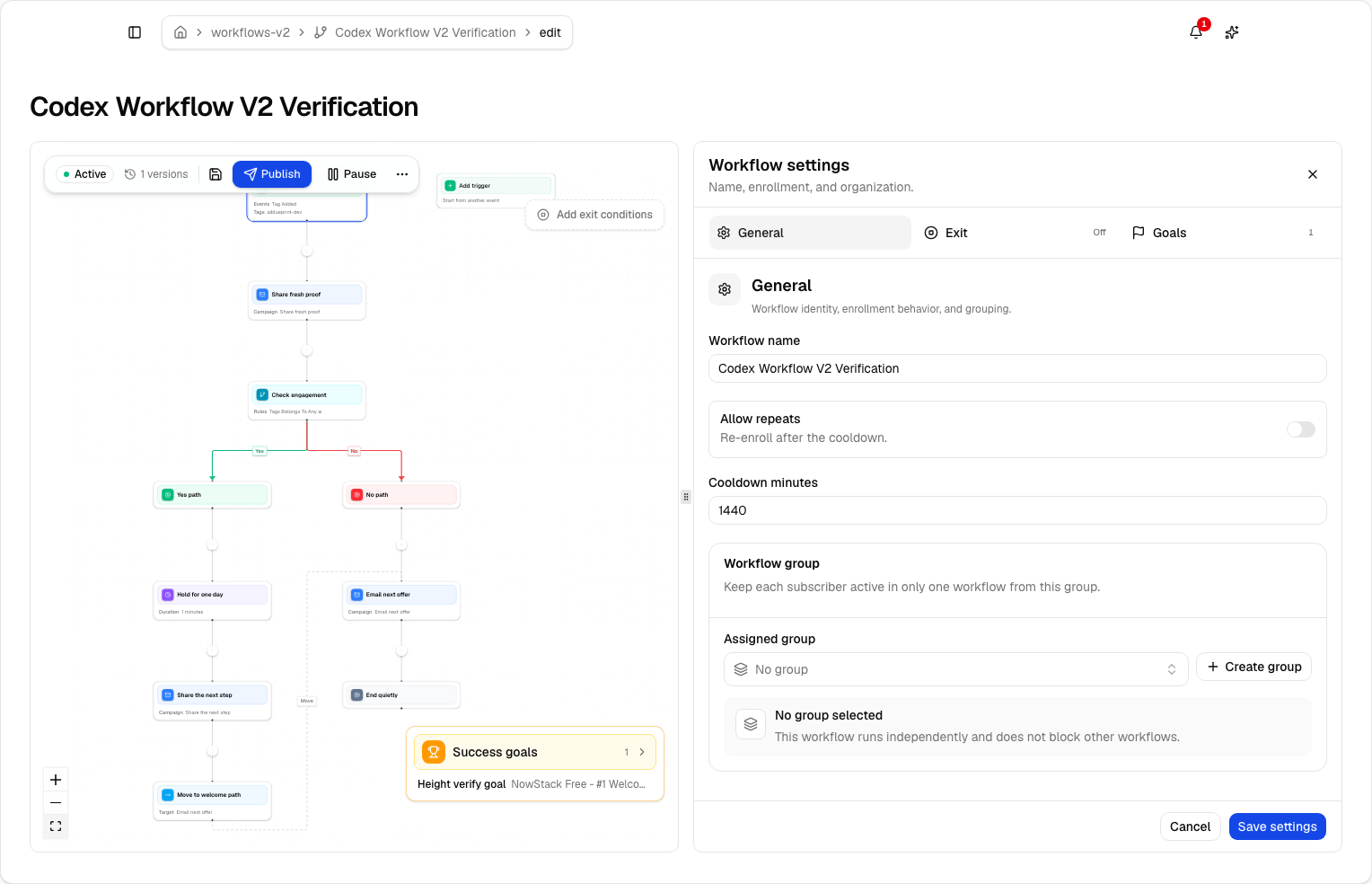
Lumail exposes 89 organization-scoped MCP tools covering campaigns, subscribers, tags, segments, workflows, templates, analytics, and transactional sending. The same operations run in ChatGPT, Claude, Claude Code, and Cursor, and through a CLI, a TypeScript SDK, and a REST API. An agent works on your real audience and workflow state, not a sandbox.
In practice you can ask an assistant to:
- draft next week's campaign from a brief and your existing template;
- segment subscribers by tag or engagement before a targeted send;
- read a workflow graph and explain why a subscriber took a branch;
- summarize last month's campaign results without exporting a CSV.
Choose Lumail if you store a large list and do not want the bill to jump with every contact tier, or if you want workflows and transactional email available from the free plan up.
Choose Campaign Monitor if you run email for clients
Campaign Monitor is a mature marketer's tool, and its agency features are hard to match. It is the better fit for some teams.
Choose Campaign Monitor if:
- you are an agency that needs white-label client accounts and client billing;
- your team works in the dashboard with in-app AI, not through agents or a CLI;
- you send rarely and would rather buy pay-per-campaign credits than a subscription.
Lumail does not offer agency white-label or client billing. Its focus is one organization's email system: audiences, workflows, delivery, and programmable access.
Compare the pricing models, not the starting prices
Campaign Monitor charges by plan and by how many contacts you store. There are three plans: Lite, Essentials, and Premier. Lite caps monthly sends at five times your contact tier; Essentials and Premier allow unlimited campaign and journey sends. Annual billing saves 10%, and above 50,000 contacts pricing is custom.
A few reference points from Campaign Monitor's published monthly prices:
- Up to 500 contacts: Lite $13, Essentials $31, Premier $171;
- 5,001 to 10,000 contacts: Lite $117, Essentials $182, Premier $300;
- 25,001 to 50,000 contacts: Lite $397, Essentials $644, Premier $1,074.
Lumail charges by emails sent and never by stored contacts:
- Free: 3,000 emails per month, no credit card;
- Premium: $20/month with 40,000 emails included, then $0.60 per 1,000;
- Business: $200/month with 400,000 emails included, then $0.40 per 1,000.
A worked example
Say you have 8,000 contacts and send two newsletters a month, so about 16,000 emails.
On Lumail, that is Premium: $20 a month, with room for 24,000 more emails before any overage.
On Campaign Monitor, 8,000 contacts falls in the 5,001 to 10,000 tier: $117 a month on Lite, whose 50,000-email cap covers the sends, or $182 on Essentials.
Even at the small end, price is rarely Campaign Monitor's advantage. A list under 500 contacts is $13 a month on Lite with a 2,500-email cap, which fits inside Lumail's free plan. The case for Campaign Monitor is its builder and agency tooling, not its bill.
Compare automation and transactional email
Both products do this well, which makes the comparison more about access than depth. Campaign Monitor's journey designer comes with prebuilt welcome, abandoned cart, anniversary, and thank-you journeys, plus custom journeys with timing and conditions, drip series, and RSS-to-email. Journeys require a monthly plan, and some features, such as send-time optimization, are Premier only.
Lumail's workflow engine is graph-based and included on every plan, including Free. It supports subscriber, tag, event, schedule, and manual triggers; email, wait, action, and webhook steps; condition and weighted branches; and goals and exit rules. Agents can read and edit the same graphs through MCP, the CLI, the SDK, and the API.
Campaign Monitor includes transactional email on monthly plans, through its API or SMTP, which is a genuine strength. On Lite, transactional sends share the monthly cap; on Essentials and Premier, they have their own cap. Lumail sends transactional email through the REST API or smtp.lumail.io:587 with STARTTLS on every plan, in the same organization as your campaigns.
Migrating from Campaign Monitor to Lumail
- Export lists and suppressions. Export contacts with custom fields, plus unsubscribes and bounces, and import the suppressions into Lumail first.
- Authenticate your sending domain. Set up SPF and DKIM in Lumail and verify the domain while Campaign Monitor keeps sending.
- Rebuild one journey as a workflow. There is no journey importer, so recreate your welcome journey as a Lumail graph and test it with a few addresses.
- Switch transactional SMTP. If you use Campaign Monitor's SMTP for app email, point your app at
smtp.lumail.io:587once the domain is verified. - Send one campaign to a small segment. Check rendering, links, and unsubscribe behavior before moving the full list.
Frequently asked questions
Is Lumail a Campaign Monitor alternative?
Yes, for teams that want agents or code in the loop. Campaign Monitor is a marketer and agency dashboard priced by contacts; Lumail bills by emails sent and exposes campaigns, workflows, and transactional email through 89 MCP tools.
Is Lumail cheaper than Campaign Monitor?
Usually, yes. At 5,001 to 10,000 contacts Campaign Monitor Lite is $117 a month, while Lumail Premium covers 40,000 emails for $20. Campaign Monitor has no free plan, and Lite starts at $13.
What is the main difference between Lumail and Campaign Monitor?
Campaign Monitor prices by stored contacts and treats AI as an in-app assistant. Lumail prices by emails sent and lets agents and developers operate the same account as humans, with workflows and transactional email on every plan.
Can I migrate from Campaign Monitor to Lumail?
Yes. Export contacts and suppressions, authenticate your domain, and rebuild journeys as Lumail workflows. Transactional SMTP switches over by pointing your app at Lumail's SMTP server.
Which one should you choose?
Choose Campaign Monitor if you are an agency or a marketing team that wants a polished builder, prebuilt journeys, and client white-label tools, and your team will work in the dashboard.
Choose Lumail if your list is large or growing, or if you want agents to build workflows, run campaigns, and send transactional email through 89 MCP tools, on a bill that follows what you send.
You can start Lumail free with 3,000 emails per month and no credit card, review the pricing plans, or browse the full comparison hub. Comparing more than two tools? See the best Campaign Monitor alternatives.